
From 1936 to Today: The Evolution of the Loafer
There are few pieces in a wardrobe that have managed to stay relevant for as long as the loafer. Nearly nine decades after G.H. BASS introduced the Weejuns, the silhouette still feels completely at home in the way modern men dress.
That's quite an achievement for a shoe that was inspired by farmers.
Over the years, the loafer has been associated with Ivy League campuses, American prep, musicians, artists and fashion movements, but it has never really belonged to just one group.
For Jesse Gallant, a South African model and multi-award-winning hairstylist with a keen eye for fashion, it’s the loafer’s ability to work across all looks that makes it such a favourite.
“A loafer has a versatility that a lot of other shoes don’t,” he says. “It can be dressed up or down and still look intentional. You can wear one with tailoring, denim or even a more relaxed summer outfit.”
From Norwegian Farms to Mainstream Style
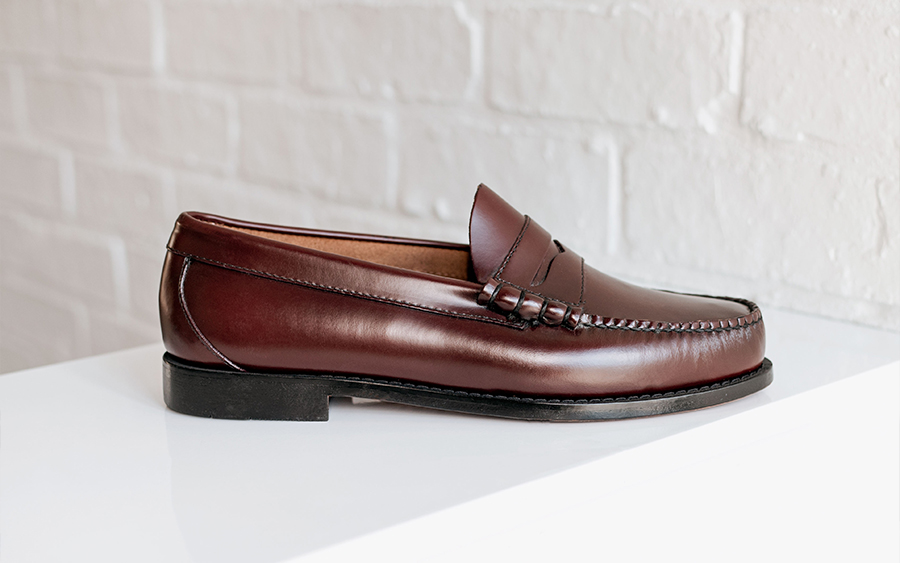
G.H. BASS introduced the Weejuns in 1936, taking inspiration from a traditional Norwegian farmers slip-on. The design was uncomplicated and functional, but once it reached America, it began to develop a character of its own.
The loafer became particularly popular among college students, eventually becoming closely associated with Ivy League style. From there, it moved into popular culture and was adopted by generations of men.
That history just goes to show how the loafer has always been open to interpretation.
Jesse has seen that first-hand through his work.
“Being more involved in fashion and modelling has taught me to experiment more,” he says. “But I’ve also become more confident in knowing what genuinely feels like me and what fits my body type best.”
That confidence to edit, rather than simply copy, is at the heart of modern personal style.
The Loafer, Reconsidered
For a long time, the loafer was closely tied to more traditional menswear. These days, it has found itself in much less predictable company.
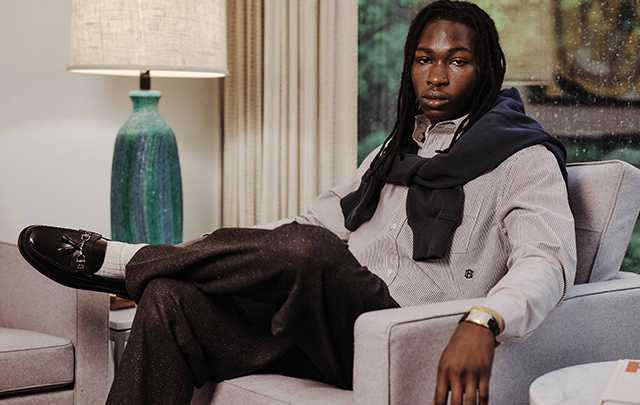
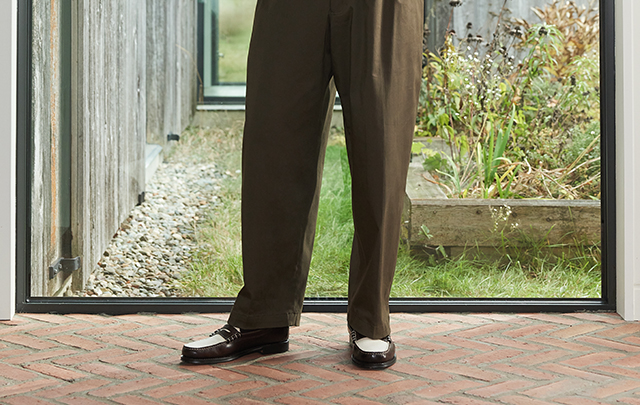
Wide trousers, denim, shorts and oversized tailoring have all become part of the modern loafer wardrobe. The result can be polished, relaxed or somewhere in between, depending on how the rest of the outfit comes together.
Jesse sees this as part of a broader change in menswear.
“Men have become much more comfortable experimenting with silhouettes, jewellery, colour, footwear and accessories,” he says. “I think there’s a lot more freedom now to explore fashion without feeling restricted by traditional ideas of masculinity.”
It also explains why the loafer continues to work for men with very different personal styles. The shoe itself doesn't dictate the formality of the rest of the outfit.
Jesse's own approach is to take inspiration from fashion without becoming too concerned with following every new movement.
“I take inspiration from trends and then interpret them in my own way. Fashion should inspire you, not control you.”
A South African Take
There is another layer to the way classic pieces are worn here. South African fashion trickles through from international style, but we as a nation tend to give things a unique take.
For Jesse, that recognition is important.
“South African style has a very natural mix of influences. We have international fashion coming in, but we also have our own climate, culture and street style. I think South African men tend to make classic pieces feel more relaxed and individual.”
It's easy to see that in the way loafers have moved beyond their traditional setting. A pair can work with a tailored look for an occasion, but there is nothing stopping you from wearing the same style with something much more relaxed.
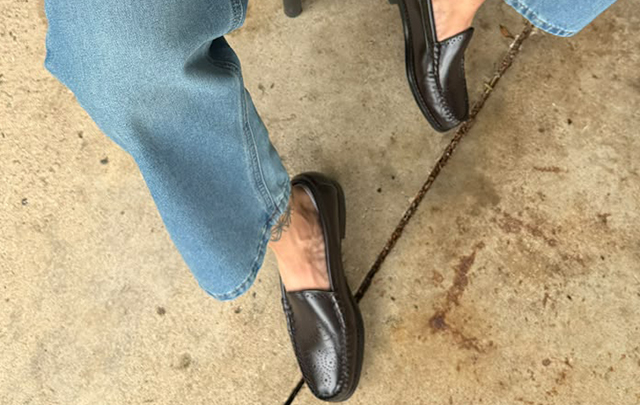
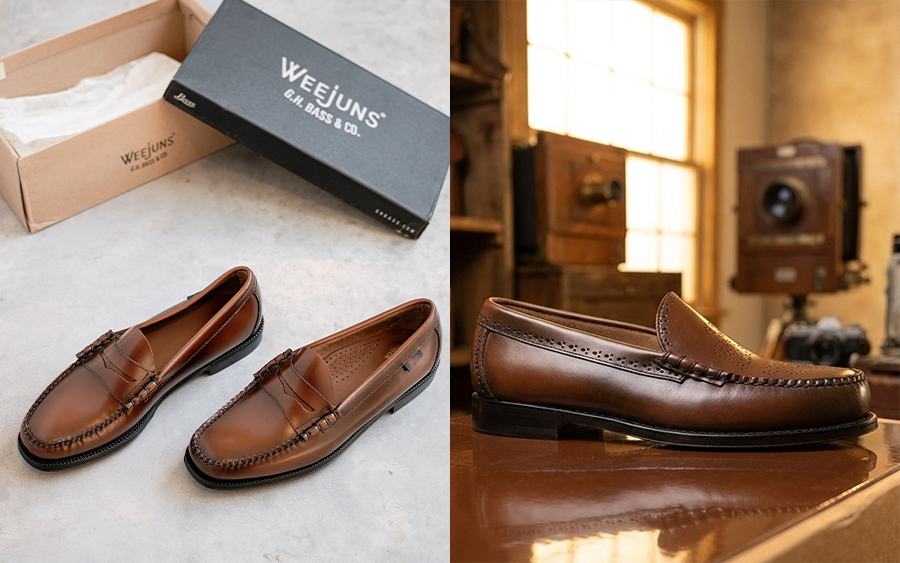
For his own G.H. BASS looks, Jesse’s go-tos are the Weejuns Venetian Brogue and Weejuns Step Larson Moc Penny. Both sit within the same long-standing Weejuns story but offer quite different starting points for an outfit.
The Venetian Brogue brings added detail to the classic loafer shape, while the Step Larson Moc Penny has the familiar profile that has become so closely associated with G.H. BASS
It's a good illustration of just how much room there is within the loafer category itself.
Why Jesse starts with the shoes
For Jesse, footwear isn't something he thinks about after the rest of an outfit has been decided. It's usually where the process starts.
“My starting point would definitely be a pair of shoes, then working my way to the top,” he says. “I always get excited when I have a new pair or when I haven’t worn a pair in a while.”
His work has made him particularly conscious of the small details that can make a look feel complete. Hair, clothing, accessories and footwear all need to work together, he explains, and shoes can have a bigger impact than people realise.
“Footwear is especially important because it can completely change the feeling of an outfit. Sometimes the shoes are actually the most important part.”
What Keeps a Classic in the Wardrobe?
Fashion will always move on. But the question is, which pieces do you choose to take with you?
For Jesse, longevity comes down to more than whether something happens to be fashionable at a particular moment.
“Quality, versatility and how you feel wearing it,” he says. “If a piece still makes you feel confident years later, it has earned its place in your wardrobe.”
It is a fitting description of the Weejuns. Since 1936, they have been worn in ways G.H. BASS could never have predicted, yet the fundamental design still feels familiar.
That is the interesting thing about the loafer's history. It hasn't needed to become something completely different to remain relevant. Each generation has just found a new way to wear it.
Nearly 90 years on, the Weejuns are still doing what a great piece of menswear should do: giving the man wearing them plenty of room to make them his own.
That balance of heritage and individuality is what G.H. BASS has been bringing to men’s footwear since 1936.